September 18, 2026
The first week of a carpentry apprenticeship is mostly watching, carrying and remembering names. You will not frame a roof or hang a door by Friday. You will learn where the site toilet is, which van has the good drill bits, and why a swept floor matters more than you'd think.
It's a strange week: half nerves, half boredom, with brief moments when something finally clicks. Here's what the days usually look like, and how to handle yourself so the people around you decide you're worth teaching.
Day One Is Paperwork, Introductions and Pointing at Things
Most first mornings start in a site cabin, an office, or the back of a van. Before you pick up a tool you'll go through an induction: emergency exits, first aid, the fire assembly point, who the supervisor is, where materials are stored, and where you're allowed to walk. Pay attention. Wandering somewhere you shouldn't on a busy site is how people get hurt.
You'll be issued or asked to bring personal protective equipment. Boots with ankle support and a decent sole, a hard hat if the site requires it, high-visibility clothing, safety glasses, gloves. Wear them properly, not pushed up on your head. Supervisors notice that instantly.
You'll also meet a dozen people whose names you'll forget immediately. Write them down. A small notepad in your pocket is the most useful thing you'll carry all week. "Dave, foreman, red van" is enough.
The Rhythm of a Working Day
Hours vary by employer and region, but a common pattern on residential and commercial jobs runs like this:
- 6:45–7:00 — arrive, get changed, sign in, set up tools
- 7:00–10:00 — first work block, usually the most productive stretch of the day
- 10:00–10:15 — tea or coffee break
- 10:15–12:30 — second block; you'll probably be paired with a qualified carpenter or a more experienced apprentice
- 12:30–13:00 — lunch, often eaten sitting on a stack of timber
- 13:00–15:30 — afternoon work, then clean-up
If you're on day release, one day a week is spent at college instead. That day matters more than it feels like at the time. The theory and the measured drawing work are what turn a person who can use a saw into a carpenter who can solve problems.
Your actual tasks in week one will be humbling: sweeping, stacking timber, moving materials, holding the other end of a tape measure, fetching things, sanding, watching. That isn't busywork invented to test you. Every one of those jobs puts you close to the work and teaches you how a site actually runs.
Safety Orientation Isn't a Formality
You'll hear a lot about safety in the first few days, and some of it will sound obvious. The point isn't to insult your intelligence. Sites change hour by hour, and a safe route across a floor at nine in the morning can be a hazard by two.
A few things genuinely matter in week one:
- Never use a power tool you haven't been shown how to use, even if you've used something similar at home.
- Ask someone to watch your first cuts on a mitre saw or circular saw.
- Don't leave tools on the floor or across walkways. Trips are the most common way people get hurt on site.
- Ask before moving someone else's material. That stack may be a cut list for the afternoon.
- Speak up if something feels unsafe. Being the apprentice doesn't remove your right to say no.
If you cut yourself, however small, clean it and tell someone. There's no prize for hiding an injury. If you're ever unsure whether a task or a substance is safe for you, ask your supervisor or training provider, and get proper medical advice where it matters.
What to Put in Your Tool Bag
Don't buy everything at once. Ask your employer what they provide before you spend money — many firms supply power tools and larger hand tools, and most expect an apprentice to bring the basics. A sensible starting set:
- A 5 m or 8 m tape measure with clear markings
- A carpenter's pencil, a marking knife and a chalk line
- A utility knife with spare blades
- A 450 g claw hammer and a nail punch
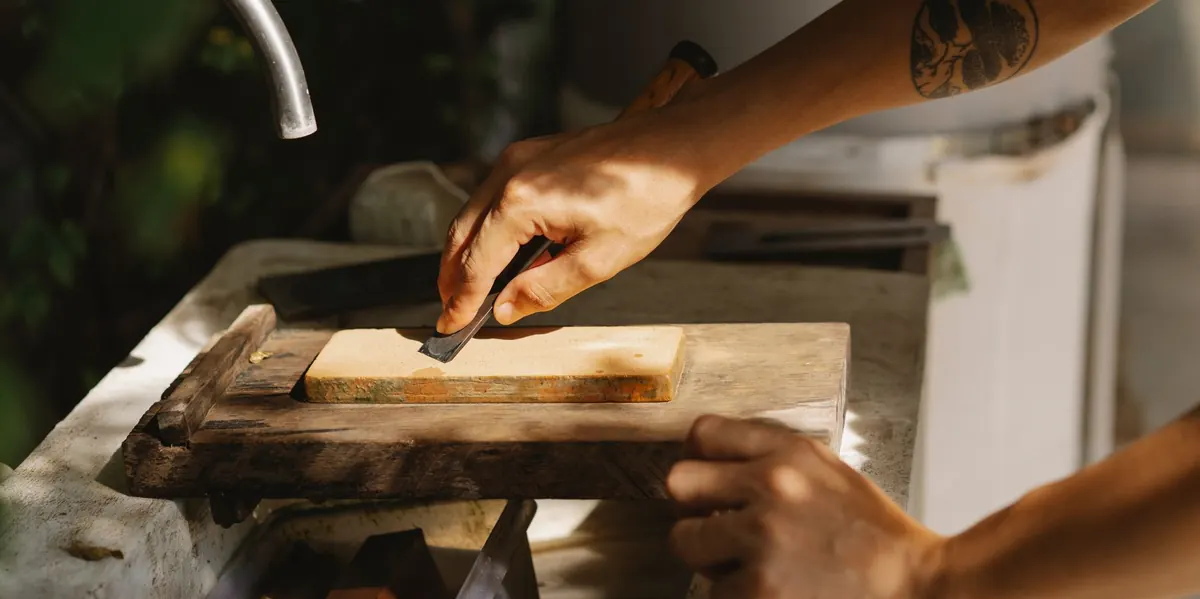
- A small set of chisels
- A combination square and a speed square
- A tool belt or bag you can carry comfortably all day
- A notepad, a pen, safety glasses, gloves and a dust mask
Keep it clean and know what you own. Borrowed tools go missing, and nobody enjoys the conversation that follows.
How to Make a Good Impression Without Trying Too Hard
You don't need to be the fastest or the strongest. You need to be reliable and easy to work with.
Be early. Ten minutes gives you time to park, get changed and have your tools ready before the day starts.
Put the phone away. Check it at break, in the van, or not at all. A phone in your hand while someone explains a job is the quickest way to be handed the tedious tasks.
Repeat instructions back. "So you want this rail cut at 900 with a 45 on each end, is that right?" It sounds fussy. It prevents expensive mistakes.
Write things down. Measurements, names, which blade goes on which tool. You won't remember it all, and pretending you will is worse than checking.
Say when you don't understand. "I haven't done that before, can you show me once?" is a perfectly good sentence for a first-week apprentice. Guessing is not.
Clean up without being asked. Sweeping your area while others pack up marks you as someone who pays attention.
The Mistakes You'll Make, and the One That Matters
You'll cut something short. You'll dull a chisel. You'll spend ten minutes hunting for a tool that was in your hand a moment ago. All of that is normal and forgettable.
What isn't forgettable is hiding a mistake. If you've cut a piece wrong, say so straight away. Timber can be reordered; an error buried behind finished work can cost a day to put right. The people training you care far more about honesty than about a wasted offcut.
How to Close Out the Week
On Friday, ask your supervisor one simple question: "What should I get better at next week?" Listen to the answer, write it down and work on it.
Then handle the basics. Make sure your boots are dry, your clothes are washed and you know what time Monday starts. Check your apprenticeship paperwork, pay details and college dates with your employer or training provider, since hours, wages and course requirements vary by country and region. If anything about your contract or pay is unclear, ask the training provider or a qualified adviser rather than relying on what a mate told you.
Eat properly, sleep properly and give your hands a chance to toughen up — the first weeks hurt. By next Friday you'll be tired, a bit bruised and noticeably more useful than you were on Monday. That's the whole job of week one.
Photo: ThMilherou / Pixabay