October 06, 2026
On most crews, the first ninety days are less a test of skill than a test of habits. A foreman can teach you to cut a set of stairs or frame a wall. What he can't teach is whether you'll be standing at the tool trailer at 6:15 with your bags on, or texting at 6:35 about traffic. The carpenters who last are rarely the fastest on day one. They're the ones who are predictable, in a good way.
Here's what a foreman is actually watching for while you find your feet.
Show Up Early, and Be Honest When You Can't
Punctuality on a job site means something specific. It isn't pulling into the lot at start time. It's being at the work area, in your gear, with your belt on, ready for the morning huddle. If the crew starts at 7, plan to arrive at 6:40. That buffer covers traffic, a locked gate, and the five minutes you'll need to learn what changed since yesterday.
Everyone has a bad morning eventually. The difference is what you do with it. Call or text your foreman the moment you know you'll be late, not when you're already twenty minutes behind. A heads-up lets him move you off a task that needs two people. Crews forgive a flat tire. They remember silence.
Consistency beats heroics. Five steady weeks of being early will do more for your reputation than one week of twelve-hour days followed by three mornings of rolling in at eight.
Safety Is the Fastest Way to Earn Trust
Nothing gets a new carpenter noticed faster than a clean, safe work area, and nothing gets him sent home faster than a careless one. Safety isn't paperwork. It's a hundred small decisions before lunch.
- Wear your PPE without being reminded. Glasses, hearing protection, and a mask when you're cutting or sanding.
- Keep your area clear. Coil cords, stack offcuts, sweep up before the mess spreads.
- Never run a tool you haven't been shown how to use, even if you've used something similar.
- Ask before you cut, drill, or pull anything you're not certain about. Wires, pipes, and load-bearing members don't announce themselves.
- Keep three points of contact on ladders, and don't reach past your balance point.
- Speak up about near-misses. A board that nearly fell is worth mentioning.
If you see something unsafe and you're not sure whether to mention it, mention it. A foreman would rather answer a question than file an incident report. Note that site rules and required training vary by region and employer, so confirm the specifics with your supervisor rather than assuming.
Take Care of the Tools — Yours and the Company's
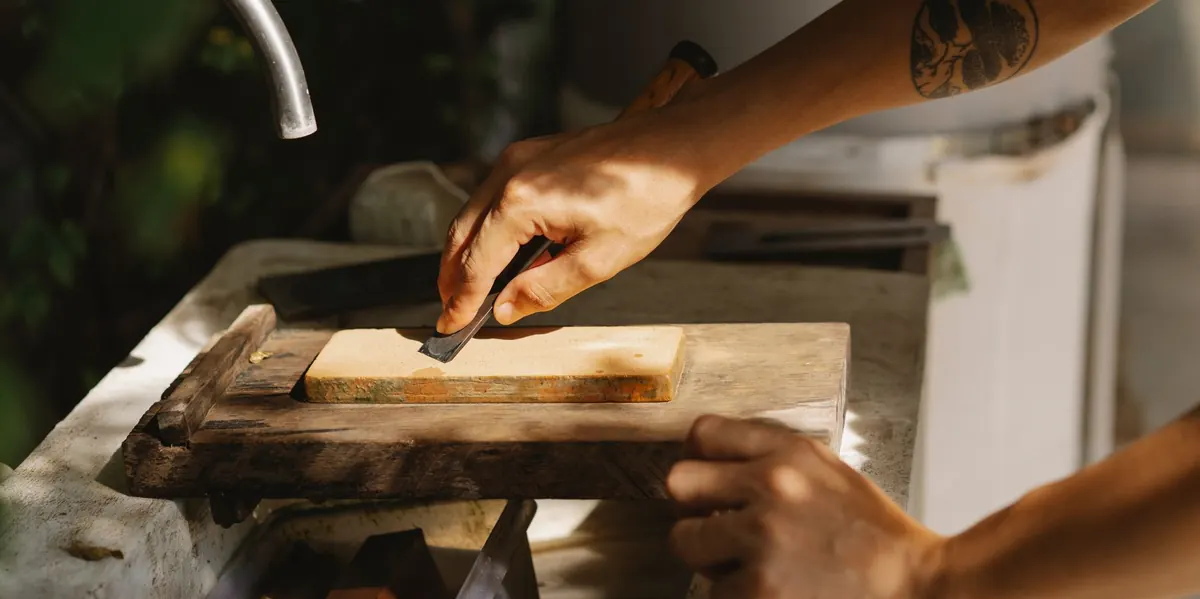
Tool care is a character test that shows up every single day. Sharp blades, charged batteries, oiled and wiped-down tools, cords coiled instead of knotted. Shared tools go back to the trailer at the end of the shift, not left on a sawhorse in the rain.
If something breaks, say so before it hurts someone or ruins a cut. A damaged guard or a frayed cord reported at 3 p.m. is a small problem. The same thing discovered after an injury is a very large one.
Borrowing is fine, within reason. Ask first, return it promptly, and hand it back in the condition you got it. A borrowed square that never comes back, or a circular saw with a dull blade, tells your foreman plenty about how you'll treat his schedule.
Talk Like Part of the Crew
Good communication on a job site is short and early. Repeat instructions back so you both know you understood. Ask your questions in one batch when the person is free, rather than chasing them across the site every ten minutes. When a task is finished, say so and ask what's next instead of waiting to be found.
Questions Are Welcome; Guessing Is Not
Mistakes are normal in the first months. Hiding them isn't. If you cut a piece short or set a wall out of square, tell someone while it can still be fixed cheaply. A five-minute correction at 10 a.m. becomes a two-hour rebuild when it's discovered a week later.
Keep your phone in your pocket except on breaks, and keep disagreements off the work floor. If you think a plan is wrong, raise it quietly with your foreman, not loudly in front of the homeowner.
Show Initiative Without Overstepping
Initiative usually looks ordinary: grabbing a broom, restocking boxes of screws, carrying material, helping the person on the ladder, tidying the trailer at the end of the day. It also means watching the sequence of work and anticipating what comes next, so you're already moving when you're called.
There is a line, though. Don't start a task that changes the plan, and never improvise on anything structural or in a finished space. The safe version of initiative is to ask for the next task, then handle the small things nobody should have to ask you to do twice.
What the First 90 Days Usually Look Like
- Weeks 1–2: Learn names, site rules, where materials and tools live, and how the crew starts the day. Ask for a walkthrough of the drawings.
- Weeks 3–4: Take on small tasks alone. Carry a notebook and write down cuts, measurements, and instructions you'll need again.
- Month 2: Build speed. Look for repetition in your work and set up so the next cut is faster than the last.
- Month 3: Ask for feedback directly. "What's one thing I could do better?" Then change it before the next review.
Not every crew follows that rhythm, and a slow start doesn't mean you're failing. What matters is that the trend line is going the right way month to month.
Earning Your Place on the Crew
Ninety days isn't a probation you pass by being brilliant. It's one you pass by being reliable. Show up early, work safe, keep tools in order, communicate clearly, and pitch in. Those five things are worth more to a foreman than any single skill you'll pick up this year.
At the end of each month, ask for two minutes of honest feedback and act on it. If you're working toward an apprenticeship or a qualification, keep a simple record of the tasks you've completed and the tools you've been signed off on, and check with your employer or the relevant trade body about local certification requirements. The habits you build now are the ones that will follow you from crew to crew for the rest of your career.
Photo: StockSnap / Pixabay